
How Many Calories Should I Eat to Lose Weight? A Calculator Guide
Practical nutrition guidance for making everyday menu choices with more context and less guesswork.
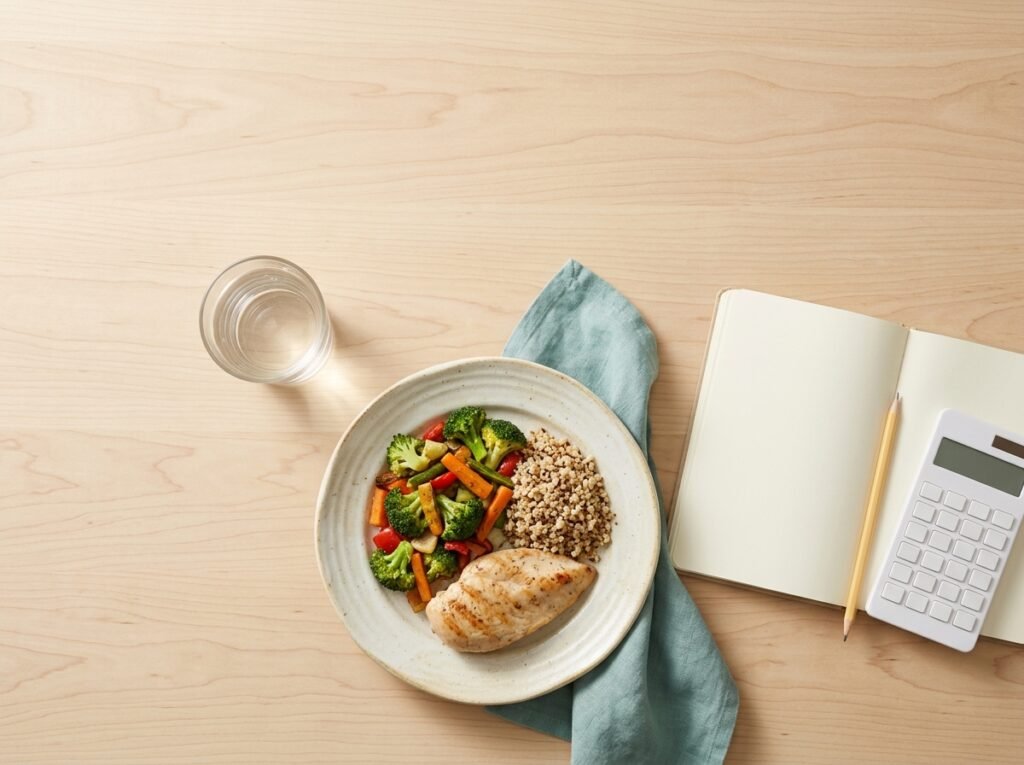
A calorie calculator gives you a maintenance number: roughly what you eat to stay the same weight. The question most people ask next is: how many calories should I eat to lose weight?
The short answer: Work out your maintenance calories, then eat fewer than that. The NHS suggests reducing your intake by around 600 calories a day, and the CDC says a steady pace of about 1 to 2 pounds a week is more likely to be kept off than faster loss. These are general guides, not personal prescriptions. If you are pregnant, take medication such as tirzepatide, or have a medical condition, speak to a healthcare professional first.
The Quick Method in 4 Steps
- Find your maintenance calories. Use a calculator or formula to estimate what you need to stay the same weight.
- Choose a modest deficit. Eat fewer calories than maintenance, aiming for steady loss.
- Check your target feels sustainable. A number you cannot keep up is not a useful number.
- Track and adjust. Follow your weight and intake for two to three weeks, then change slowly.
Step 1: Find Your Maintenance Calories
Your maintenance level answers a related question: how many calories should I eat per day just to stay the same weight? The NHS gives average figures of about 2,000 calories a day for women and 2,500 for men, and notes they vary with age, body size, height, and activity level.
For a personal estimate, calculators use equations that take your sex, weight, height, and age, then adjust for activity. Our guide to Mifflin-St Jeor vs Harris-Benedict explains the two most common formulas, and the guide on how to calculate your daily calorie needs at home walks through the full process. If you want to know how many calories you should eat daily without changing weight, this is the number.
The NIH also offers its Body Weight Planner, which it says may help you set realistic goals for consuming fewer calories.
Step 2: Choose Your Deficit
To lose weight, you eat and drink fewer calories than you use. The NHS says to aim to reduce your intake by around 600 calories a day, and the CDC describes “about 1 to 2 pounds a week” as a gradual, steady pace.
Two points keep this in perspective:
- A bigger deficit is not automatically better. The CDC notes that people who lose weight at a steady pace are more likely to keep it off.
- The numbers are rough. Real-world results vary with metabolism, activity, and how accurately you track. That is why Step 4 matters.
Choosing calories to lose weight is a balance between progress and something you can keep doing.
How Many Calories Should I Eat to Lose Weight? A Female Example
The NHS average for women is 2,000 calories a day. Here is how the method works with that figure.
| Step | Calculation | Result |
|---|---|---|
| Maintenance (NHS average for women) | Starting point | about 2,000 kcal |
| Deficit (NHS suggestion) | Subtract around 600 | about 1,400 kcal |
This is an illustration, not a recommendation for you. Individual needs differ, and your own calculator result may be higher or lower.
For example, if a calculator estimates a maintenance level of about 1,880 calories for you (the sample woman in our formula guide), the same 600-calorie cut would leave about 1,280 calories. That is a large reduction for some people, and a smaller deficit may feel more sustainable. If a target feels too low, talk to a GP or dietitian before going ahead.
How Low Is Too Low?
The official sources I checked do not give a single minimum number, and I won’t invent one. What they do say is useful:
- The NHS advises talking to a GP or healthcare professional before changing your lifestyle to lose weight if you have a medical condition, follow a special diet for your health, or have a current or past eating disorder.
- The NHS also notes that it cannot give health advice to every person individually.
If you are unsure what is safe for you, a doctor or registered dietitian can give a personal answer. Free support is available through the eating disorder charity Beat if food and weight feel difficult.
Special Situations: Muscle, Pregnancy, and Tirzepatide
Weight loss advice does not fit every situation. These are short principles, not calorie targets.
How Many Calories Should I Eat to Put On Muscle?
Building muscle usually means eating enough to support training, not simply eating more. MedlinePlus does not give a calorie target for muscle gain. It says you need strength and resistance training, that a high-protein diet alone will not build muscle, and that athletes need only a little extra protein to support growth. It gives a protein range for athletes of about 1.2 to 2.0 grams per kilogram of body weight per day.
A practical starting point is your maintenance number from Step 1, adding only what your training requires, and tracking your results.
How Many Calories Should I Eat Per Day When Pregnant?
Pregnancy is not a time for a calorie-cutting plan, and this guide is not written for it. The NHS says that eating for two is a myth, and that in the final three months of pregnancy you need an extra 200 calories a day. That figure comes from UK guidance, and advice in other countries may differ.
NHS guidance for pregnant people with a BMI of 30 or above says not to try to lose weight during pregnancy, as it will not reduce the chance of complications and may not be safe. Ask your midwife or doctor what is right for you.
How Many Calories Should I Eat on Tirzepatide?
There is no single calorie number for people taking tirzepatide. The official Zepbound Medication Guide says to use it with a reduced-calorie diet and increased physical activity, and does not give a calorie target. It also says to drink fluids to reduce the chance of dehydration, and to tell your healthcare provider if nausea, vomiting, or diarrhea does not go away.
Your prescriber or a registered dietitian can set a personal target. If you take a different tirzepatide product, read its own medication guide.
What If the Result Doesn’t Feel Right?
Calculators estimate averages. If your result seems too high or too low:
- Track your intake and weight for two to three weeks.
- If your weight is stable, you have found your maintenance level.
- Adjust by small amounts, then reassess.
- Keep a food and drink diary, as the CDC suggests, to see where calories come from.
If you track drinks, the CalorCalc Starbucks Calorie Calculator covers calories in Starbucks drinks.
FAQs
How many calories should I eat to lose weight?
Start with your maintenance calories, then eat fewer than that. The NHS suggests reducing intake by around 600 calories a day, and the CDC describes 1 to 2 pounds a week as a steady pace. Your personal number depends on your body and circumstances.
How many calories do I eat to lose weight if I don’t know my maintenance level?
Use a calculator or the NHS averages of about 2,000 calories a day for women and 2,500 for men as a rough starting point, then track your results for two to three weeks and adjust.
How many calories should I eat daily to maintain my weight?
That is your maintenance level. The NHS gives averages of 2,000 for women and 2,500 for men, but your own number varies with age, size, height, and activity.
Do I need extra calories when pregnant?
According to the NHS, you do not need to eat for two, and you need an extra 200 calories a day only in the final three months. Ask your midwife or doctor what applies to you.
Is there a calorie target for people on tirzepatide?
The official Zepbound Medication Guide does not give one. It says to use the medicine with a reduced-calorie diet and increased activity, so ask your prescriber or dietitian for a personal plan.
Conclusion
To answer how many calories should I eat to lose weight, estimate your maintenance level, subtract a modest deficit, and adjust after two to three weeks of tracking. A calculator gives the starting number, and your results tell you whether it fits. If you are pregnant, take tirzepatide, or have a medical condition, speak with a healthcare professional before changing your intake.
Official Sources
- CDC: Steps for Losing Weight
- NHS: Calories and weight loss
- NHS: Understanding calories
- NHS Start4Life: Healthy eating in pregnancy
- NHS: Overweight and pregnant
- MedlinePlus: Nutrition and athletic performance
- Zepbound Medication Guide (Eli Lilly)
- NIDDK: Eating and physical activity to lose or maintain weight
This article provides general nutrition information, not medical advice. Calorie needs vary, and some situations, including pregnancy, medical conditions, and medication, need personal guidance from a doctor, midwife, or registered dietitian.