
How to Calculate Your Daily Calorie Needs at Home
Practical nutrition guidance for making everyday menu choices with more context and less guesswork.
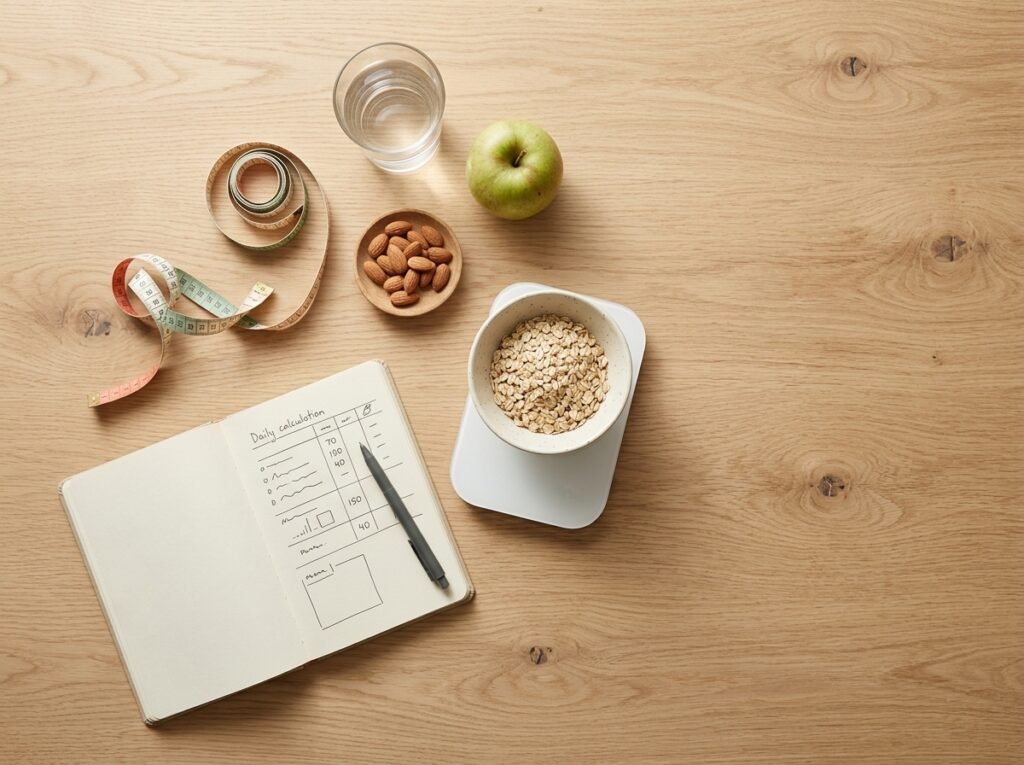
Your daily calorie needs are roughly the amount of energy your body uses in a day. You can estimate that number at home with a simple formula: work out your resting energy use (BMR), then multiply it by an activity factor. The result is an estimate, not an exact value, but it gives you a solid starting point.
This guide walks through the method step by step, with a worked example. It also explains how the Daily Move goal on a fitness tracker fits in, what 2,000 and 3,000 calorie days can look like, and how to adjust your number for your own goal. Calories are information, not a judgment, so use this as a tool rather than a rulebook.
What Are Daily Calorie Needs?
Your daily calorie needs are the number of calories your body uses in a day for breathing, circulation, digestion, and movement. Your daily calorie intake is the number you actually eat and drink, including meals, snacks, and beverages.
Two numbers matter when you plan your intake:
- Calories in: what you eat and drink.
- Calories out: what your body uses, including daily movement and exercise.
When the two are roughly equal, your weight tends to stay stable over time. Eating consistently more or less than you use is what leads to gradual gain or loss.
BMR, TDEE, and Maintenance Calories Explained
These three terms appear in almost every calorie calculator, so it helps to know what each one means.
What BMR means
BMR (basal metabolic rate) is the energy your body needs at complete rest to keep basic functions running. It does not include movement or exercise.
What TDEE means
TDEE (total daily energy expenditure) is your BMR plus the energy used for daily activity, exercise, and digesting food. It is your estimated total daily burn.
Maintenance calories in plain terms
Maintenance calories are the calories you need to keep your weight about the same. In practice, maintenance calories and TDEE refer to the same estimate.
How to Calculate Your Daily Calorie Needs (Step by Step)
This method is for healthy adults. You will need your weight, height, and age.
Step 1: Estimate your BMR
The Mifflin-St Jeor equation is a widely used formula for estimating BMR, and you can read the original Mifflin-St Jeor study on PubMed. It uses weight in kilograms, height in centimeters, and age in years.
- For men: (10 x weight in kg) + (6.25 x height in cm) minus (5 x age) plus 5
- For women: (10 x weight in kg) + (6.25 x height in cm) minus (5 x age) minus 161
To convert, divide pounds by 2.2 to get kilograms, and multiply inches by 2.54 to get centimeters.
Step 2: Choose an activity level
Pick the option that best matches a typical week. If you are between two levels, choose the lower one.
| Activity level | What it usually means | Common multiplier |
|---|---|---|
| Sedentary | Desk job, little exercise | 1.2 |
| Lightly active | Light exercise 1 to 3 days a week | 1.375 |
| Moderately active | Moderate exercise 3 to 5 days a week | 1.55 |
| Very active | Hard exercise 6 to 7 days a week | 1.725 |
| Extra active | Physical job plus hard training | 1.9 |
These multipliers are commonly used conventions, not exact measurements. Different calculators may use slightly different values.
Step 3: Multiply to find maintenance calories
Multiply your BMR by your activity multiplier. The result is your estimated maintenance calories.
Worked example
Here is a sample calculation for a 35-year-old woman who is 165 cm tall, weighs 70 kg, and exercises lightly one to three days a week.
- Weight: 10 x 70 = 700
- Height: 6.25 x 165 = 1,031.25
- Age: 5 x 35 = 175
- BMR: 700 + 1,031.25 minus 175 minus 161 = about 1,395 calories
- Maintenance: 1,395 x 1.375 = about 1,918 calories
Her estimated maintenance intake is roughly 1,900 calories a day. This is an illustration only. Your result will depend on your own numbers.
Active Calories and the Daily Move Goal
If you use a fitness tracker, you may see a “Move” goal measured in calories. On Apple Watch, the Move ring tracks active calories, which are the calories you burn through movement and exercise. Apple’s explanation of the Move ring gives the current definition. Check Apple’s support documentation for the current definition.
This matters because active calories are only part of your daily burn. Your resting calories (BMR) are not included in that number. So a Move goal of 500 does not mean you burn only 500 calories a day. Your total daily burn is resting calories plus active calories, and that is closer to your TDEE.
Trackers also estimate, and different devices can give different numbers for the same day. Treat the figures as a rough guide, not a precise measurement.
Adjusting Your Number for Your Goal
Your maintenance estimate is the starting point. From there:
- To maintain weight: aim near your maintenance number.
- To lose weight gradually: eat somewhat below maintenance. A modest gap is a common starting point, and a smaller change is easier to sustain.
- To gain weight gradually: eat somewhat above maintenance.
If you want a more detailed projection, the NIH Body Weight Planner lets you model how changes in intake and activity may affect your weight over time.
Very low calorie intakes can be unsafe without supervision. If you have a medical condition, are pregnant or breastfeeding, are under 18, or have a history of disordered eating, speak with a doctor or registered dietitian before changing your intake.
Test and adjust over two to three weeks
Because the formula gives an estimate, check it against real life:
- Eat near your target for two to three weeks.
- Track your weight trend, not single-day changes.
- If your weight is moving in the direction you want, keep going.
- If not, adjust by a small amount and test again.
Small changes can be useful. You do not need to overhaul everything at once.
What Does a 2,000 Calorie Day Look Like?
The number 2,000 appears on food labels because the FDA uses it as a general reference, as explained in the FDA guidance on the 2,000 calorie reference. It is not a personal target
If 2,000 calories happens to suit you, here is one illustrative way to spread it across a day:
- Breakfast: about 450 calories
- Lunch: about 600 calories
- Dinner: about 650 calories
- Two snacks: about 150 calories each
This split is an example of how the calories could be distributed, not a prescription. Your own meals, appetite, and schedule may look quite different.
How to Eat 3,000 Calories a Day
Some people need around 3,000 calories because of high activity, a larger body size, or a weight-gain goal. If you need more than you feel like eating, these practical habits can help:
- Eat more often. Add snacks between meals instead of relying on three big plates.
- Choose calorie-dense foods. Nuts, nut butter, olive oil, avocado, dried fruit, and whole-milk dairy add energy in small portions.
- Drink some of your calories. Smoothies and milk-based drinks are easier to finish than large meals.
- Add extras to what you already eat. A spoonful of oil, cheese, or seeds raises the total without a bigger plate.
Check your own calculation first. If your estimate is far below 3,000, you may not need that much.
Don’t Forget Drinks
Drinks can add up quickly, especially specialty coffees, juices, and sweetened beverages. They are easy to overlook when logging a day.
Water, plain tea, black coffee, and unsweetened sparkling water contain little to no calories. Zero-calorie and low-calorie drinks vary by brand and ingredients, so check the label on any packaged product.
If you order from Starbucks, the Starbucks Calorie Calculator can help you estimate calories for your customized drink. Nutrition values can vary by location, size, and customization, so check the brand’s official nutrition information for exact figures.
Limits of Calorie Calculators
Every calculator, including this method, uses averages. Real bodies vary in muscle mass, genetics, hormones, sleep, and daily movement. Food labels can also differ slightly from actual content, and restaurant portions vary.
That is why the two to three week test matters. Your own results are more reliable than any single formula.
FAQs
How many calories should I eat a day?
It depends on your age, sex, height, weight, activity level, and goal. Use the steps above to estimate maintenance calories, then adjust for your goal.
What is the difference between BMR and TDEE?
BMR is the energy your body uses at rest. TDEE is BMR plus the energy from daily activity, exercise, and digestion. TDEE is the better guide for daily eating.
Are Move calories my total calories burned?
No. Move calories are active calories only. Your total daily burn also includes the energy your body uses at rest.
Is 2,000 calories right for everyone?
No. The 2,000 figure is a general reference used on food labels. Your own needs may be higher or lower.
How accurate are calorie calculators?
They provide estimates. Tracking your weight trend for two to three weeks helps you check and refine the result.
Conclusion
Working out your daily calorie needs at home takes three steps: estimate your BMR, choose an activity level, and multiply.
When you are ready to put your number to use, explore the CalorCalc blog for more guides, or try the Starbucks Calorie Calculator to see how your drink fits into your day.
This article offers general nutrition information and is not medical advice. Consult a doctor or registered dietitian for guidance based on your health.